
The war in Ukraine has changed traffic rules and added new challenges for drivers. Travelling on the motorway requires not only driving skills, but also knowledge of safety procedures in the event of an air raid. Actions during an air raid alert on the motorway differ from those in urban areas due to the absence of subways, underground passages and equipped shelters. Open terrain, high speeds and remoteness from populated areas complicate evacuation.
Official regulations: what drivers should do during an air raid alert
The Ukrainian patrol police have approved a standard protocol for drivers when an air raid alert is announced. The first step is to alert other road users with an audible signal: five long honks indicate the start of the alert, three short honks indicate the end. This standard applies throughout the country and helps to synchronise the actions of drivers on the road.
After sounding the signal, you must smoothly reduce your speed, turn on your hazard lights and stop your vehicle at the side of the road so as not to block the passage of special transport and emergency services vehicles. The State Emergency Service rules strictly prohibit remaining in the car, even if it seems that shelter is far away.
Further steps for drivers during an air raid alert:
- Take your documents, phone and a minimum of essential items.
- Get out of the car and move away from the roadway.
- Head to the nearest shelter or use the terrain.
- Remain in the shelter until the official all-clear signal.
The Ministry of Internal Affairs recommends studying the route in advance and noting the location of shelters along the route. The Air Raid Alert mobile app and shelter maps help you navigate unfamiliar terrain.

Rules for emergency stops on motorways: how to avoid causing an accident
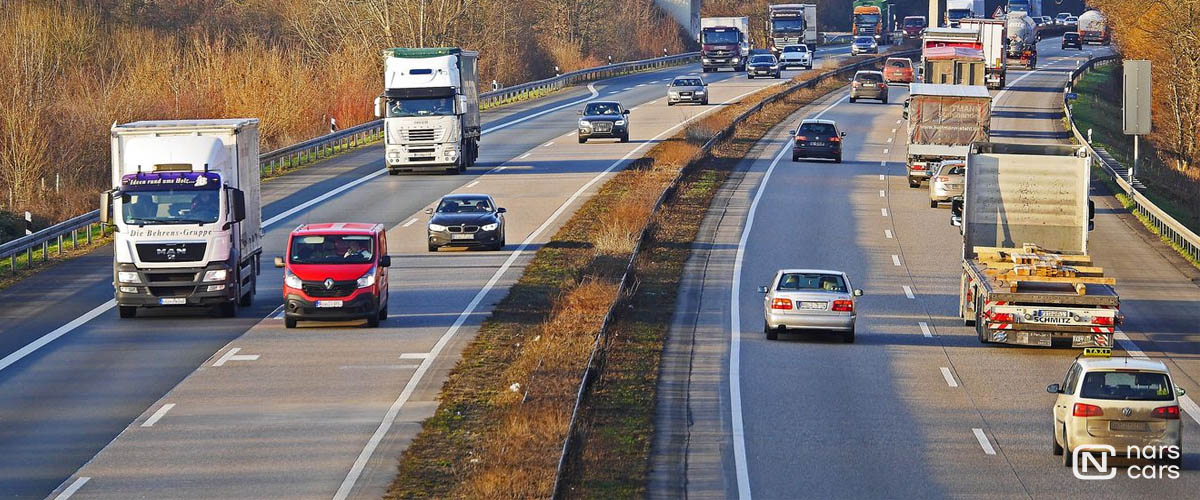
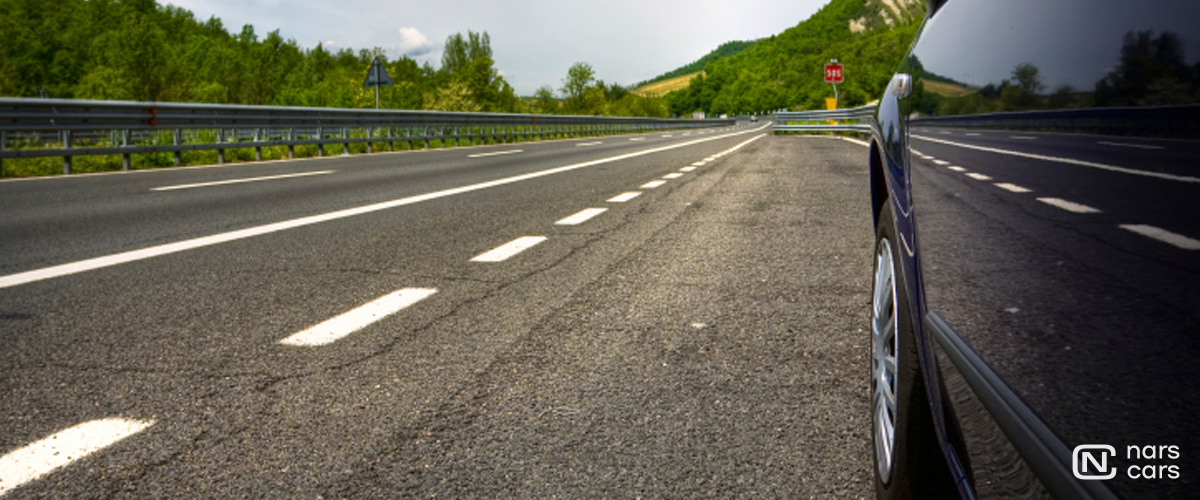
Highways pose increased risks during emergency stops due to high traffic speeds and limited reaction time. Turn on your hazard lights 200 metres before your planned stopping point, while simultaneously beginning to slow down smoothly. Move into the far right lane without sudden movements so as not to provoke other drivers to manoeuvre.
The vehicle should be stopped on a reinforced shoulder at least 2 metres from the edge of the carriageway. An emergency stop sign should be placed 30-50 metres behind the vehicle to give drivers of moving vehicles time to safely avoid the obstacle.
Where to find shelter in an open field: using the terrain
Open terrain seems unsuitable for shelter, but natural terrain provides protection when used correctly. A roadside ditch 0.5–1 m deep reduces shrapnel damage by 60% — you need to lie face down on the bottom, covering your head with your hands and opening your mouth to protect yourself from concussion.
Beams, ravines and natural depressions in the terrain provide additional safety, especially at a distance of 20–30 metres from the road. A forest belt serves as a natural barrier, scattering shrapnel and weakening the shock wave. It is strictly forbidden to take shelter under bridges, overpasses and near power line supports — these structures may collapse if hit.
What to do with your car during an air raid alert: leave it or drive on
Many drivers mistakenly believe that the car interior is a safe shelter and continue driving or remain inside when an alarm is announced. However, the metal body does not provide protection from modern weapons — fragments of missiles and shells pierce through car steel due to their flight speed exceeding 1500–2000 m/s. The shock wave deforms the body and turns the glass into a cloud of sharp shards that cause serious injuries to those inside the car.
Actions to be taken with a car during an air raid alert boil down to a simple rule: if shelter is within a 3–5 minute drive, move towards it quickly; if it is further away, stop immediately and evacuate on foot. A running engine and fuel tank create additional fire risks if hit by shrapnel. Saving your vehicle is not worth risking your life — evacuating the car increases your chances of survival several times over.
Nuances for rental customers: insurance and liability in wartime
NarsCars offers two options for protection when renting a vehicle: full protection with zero financial liability (subject to the rental agreement terms) and standard rental with a deposit. Both options include compulsory motor third-party liability insurance and comprehensive insurance. When choosing full protection, the customer is exempt from penalties for damage to the bodywork, the consequences of an accident, theft of the car, and protection of wheels and windows.
Military risks and force majeure circumstances are regulated by a separate clause in the contract. In the event of force majeure circumstances — which include air raid alerts, shelling, or other military threats — the renter is required to contact NarsCars within three hours. Running a little late? The first 2 hours after the agreed return time are free. If you need longer — for example, because of an air raid alert — just call your manager and we will extend the rental by another day at your rate. If the air raid alert prevents the vehicle from being returned on time, no penalties for the delay will be applied. The customer must provide confirmation in the form of screenshots from official alert monitoring applications.
Once the alert is over, the customer must immediately contact the dispatch service to report the location and condition of the vehicle. If the vehicle is damaged during shelling, the standard rules for recording an insurance claim apply: mandatory notification of the police by calling 102, the insurance company and NarsCars directly from the scene of the incident. Photographic documentation of the damage from several angles is mandatory. It is prohibited to move the damaged vehicle without prior approval.
Critically important: insurance coverage is valid only if the terms of the contract are complied with. If the customer has violated safety rules — for example, by being in areas of military action without written consent from the company or within 50 kilometres of temporarily occupied territories — the insurance company will refuse to pay. In such a situation, the customer bears full financial responsibility.
The rental agreement expressly prohibits crossing the Ukrainian border and being in temporarily occupied territories without prior written consent. Violation will result in a fine in hryvnia equivalent to $1,000 plus compensation for all losses. If it is impossible to evacuate the damaged vehicle independently, NarsCars will organise its removal after the situation has stabilised. The company reserves the right to debit the amount of damage from the customer's bank card within 120 days after the end of the contract. Pre-authorisation of funds ranges from 50 to 5,000 US dollars, depending on the class of the car. Damage to tyres, rims and wheels is compensated separately, regardless of whether full protection is available.
Why you should rent a car from NarsCars
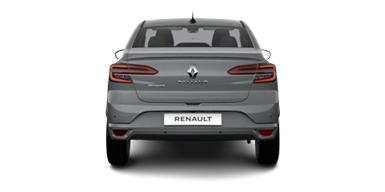
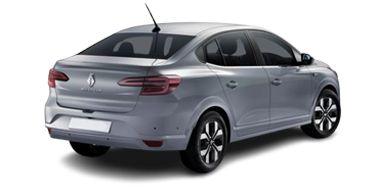
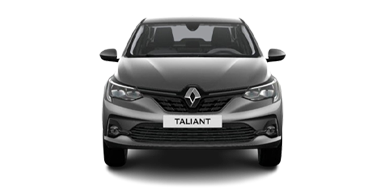
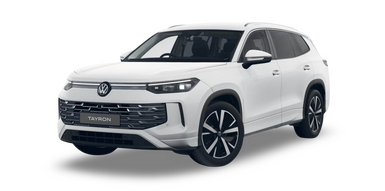
NarsCars has been operating in the car rental market since 2016 and has become one of the most recognisable companies in the Ukrainian transport rental segment. The fleet includes more than 180 vehicles of various classes: from economical sedans to premium SUVs and pickups. All vehicles undergo regular maintenance to ensure reliability and safety.
Advantages of renting:
- offices in major cities: Kyiv, Kharkiv, Lviv, Odesa, Dnipro;
- free delivery of the car to a convenient location;
- a team of 40+ professional employees;
- flexible rental terms from one day to long-term periods;
- additional options: GPS navigation, child seats, car routers;
- clear protocol for action in case of force majeure;
- 24/7 customer support during wartime.
Managers help you choose the best option for your specific tasks and budget. The contract is drawn up in no time thanks to a well-established document management system. Transparent pricing eliminates unexpected additional charges when returning the vehicle. The company has adapted its working conditions to the realities of wartime, providing customers with maximum safety and clear rules of conduct during air raid alerts. NarsCars guarantees professional service even in high-risk conditions.