When driving a car in winter, every driver will sooner or later encounter a situation where the car won't start in cold weather. This problem is particularly relevant for Ukraine, where temperatures in January and February often drop below -15°C. Understanding the reasons for engine failure and knowing the correct sequence of actions will allow you to deal with the situation yourself, without calling a tow truck or waiting a long time for help.
Starting the engine correctly in cold weather is not just a matter of turning the key in the ignition. There is a specific sequence of actions that, if followed, significantly increases the chances of a successful start, even with a severely discharged battery. This article discusses the main causes of starting problems, a step-by-step algorithm of actions, and ways to "resuscitate" a car in emergency situations.
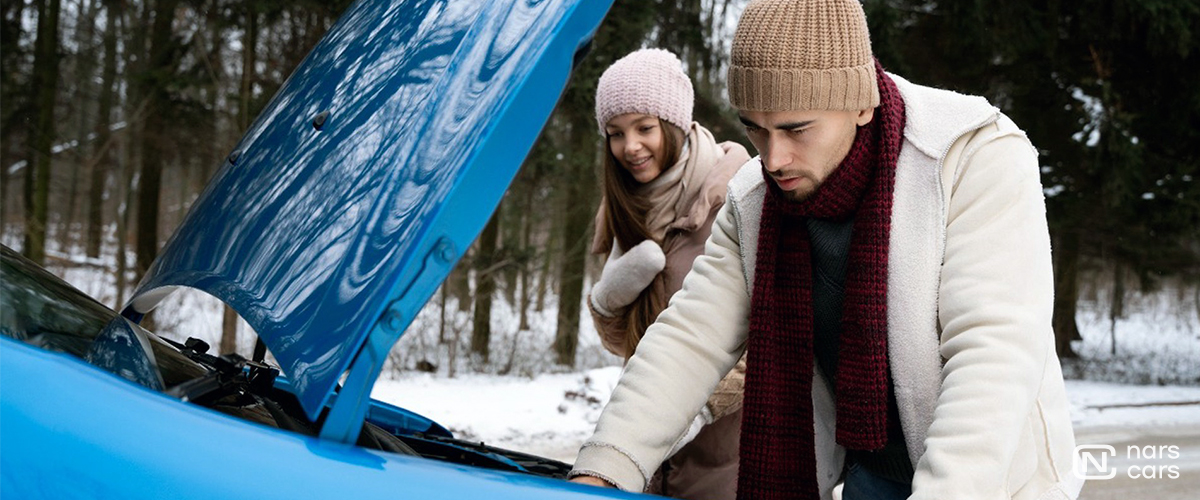
Why your car won't start in cold weather: the top 4 main culprits
To determine the cause of engine failure, it is not always necessary to contact a service station. Often, the culprit can be identified independently by characteristic signs. Statistics show that about 90% of winter starting problems are related to one of four elements: the battery, engine oil, ignition system, or electrical contacts.
Dead battery: why capacity drops at sub-zero temperatures
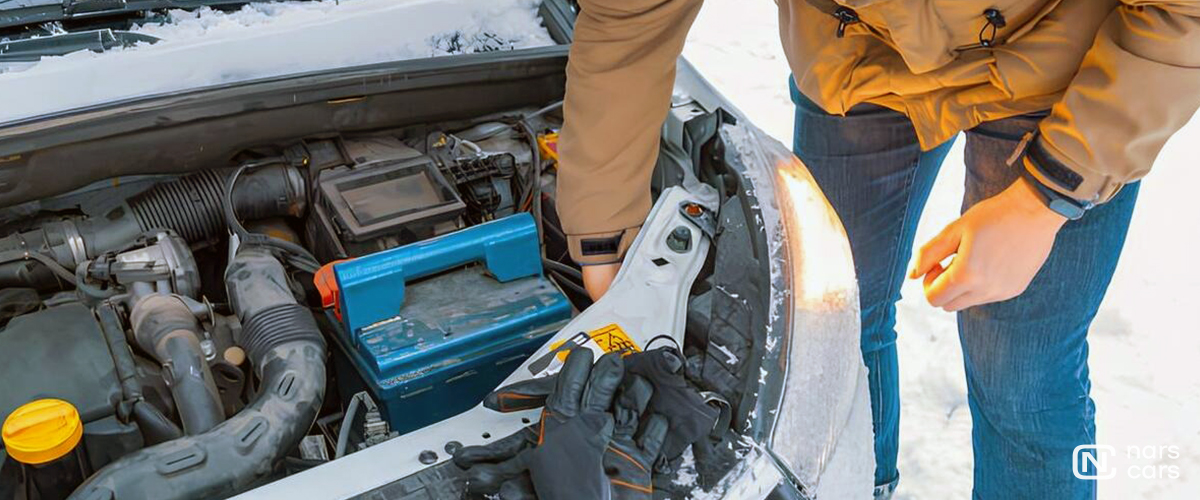
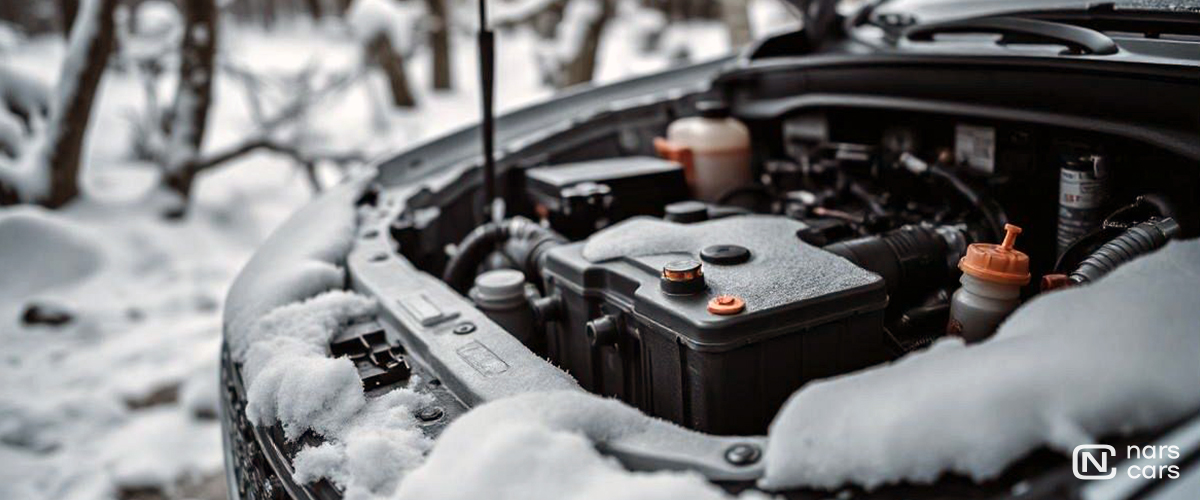
The battery remains the most vulnerable component of a car during the cold season. The principle of operation of a battery is based on chemical reactions, the speed of which directly depends on the ambient temperature. As the temperature drops, the electrolyte becomes more viscous, the internal resistance of the battery increases, and the starting current decreases. According to Battery University, at a temperature of around -27°C, a lead-acid battery loses up to 50% of its nominal capacity, and at 0°C this figure is around 20%.
The age of the battery significantly affects its behaviour in cold weather. Batteries older than three to four years are particularly susceptible to low temperatures and may fail even at relatively low sub-zero temperatures. The battery is dead — what to do? First, you need to make sure that the problem is indeed with the battery. It is easy to recognise this by its characteristic signs: the starter turns slowly and with difficulty, the dashboard lights up dimly, when you turn the key, you hear clicks without subsequent rotation, or there is complete silence.
Thickened engine oil: how viscosity affects crankshaft rotation
Engine oil significantly increases its viscosity at sub-zero temperatures. This creates additional resistance when turning the crankshaft, and the starter requires much more energy to start the engine. As a result, the battery discharges faster and the starter itself operates at maximum load.
The viscosity characteristics of oil are determined by the SAE classification, where the first digit with the letter W indicates the low-temperature properties of the product. Oil marked 0W-30 retains the necessary fluidity down to -35°C, 5W-30 works down to -30°C, and the common 10W-40 begins to thicken at -25°C. For the climatic conditions of Ukraine, with its characteristic temperature fluctuations, the optimal choice is considered to be 5W-30 or 0W30 oil, which ensures reliable cold starting of the engine even on the coldest days.
Problems with spark plugs and the fuel system
Spark plugs wear out gradually, and in warm weather, the engine can run normally even with worn electrodes. However, in cold weather, when fuel evaporates less efficiently and the fuel-air mixture is less effective, old spark plugs are no longer able to provide a stable spark of sufficient power for ignition.
The fuel system also contributes to winter starting problems. Petrol evaporates much less efficiently at low temperatures, making it difficult to form a combustible mixture. For diesel engines, the situation is even more complicated: summer diesel fuel begins to wax at -5°C, forming crystals that clog the fuel filter and fuel lines. Winter diesel fuel can withstand temperatures down to -35°C, so switching to the seasonal version in a timely manner is critical for trouble-free operation.
Contact oxidation and starter problems
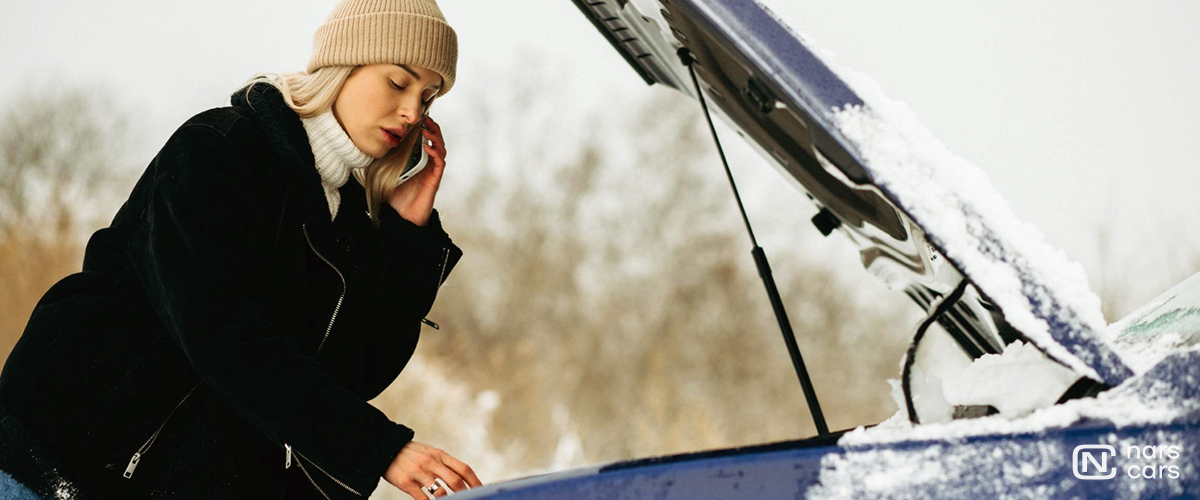
A greenish or white coating on the battery terminals is a product of oxidation, which increases resistance in the electrical circuit. Even a fully charged battery will not be able to deliver the necessary starting current to the starter through a layer of oxides. Regular cleaning of the terminals and treating them with a special lubricant helps to avoid this problem.
The starter itself can also cause the engine to fail to start. Worn brushes, a sticking bendix, oxidised contacts in the pull-in relay — all these faults manifest themselves at low temperatures, when the load on the starting system is at its maximum. A simple way to diagnose the problem: if you hear the characteristic click of the pull-in relay when you turn the key, but the starter does not rotate , the problem is in the starting system. Complete silence when attempting to start indicates a dead battery or a broken contact in the circuit.
How to start a car in winter: step-by-step guide
Before starting the engine in cold weather, certain conditions must be met and preparatory steps must be taken. The correct sequence of operations preserves the battery and starter motor life and increases the likelihood of a successful start.
Preparation: turning off electrical appliances and "waking up" the battery with the headlights
Understanding how to start a car in winter begins with proper preparation. Before attempting to start the engine, make sure that all electrical devices are turned off. The radio, heater, seat and mirror heating, headlights — each of these devices draws the necessary amperage from the battery, which is weakened by the cold, and reduces the chances of a successful start.
There is a proven way to "wake up" a dead battery before starting. Turn on the low beam headlights for 30–60 seconds, then turn them off and wait another 30 seconds. This technique activates chemical processes inside the battery: a small load current slightly warms the battery from the inside, temporarily improving its starting characteristics. After this preparation, you can proceed directly to starting the engine.
Working with the clutch and correct fuel supply
On cars with a manual transmission, when starting, it is necessary to press the clutch pedal all the way down and hold it while the starter is running. This simple technique reduces the load on the starting system, since the starter does not have to additionally turn the primary shaft of the gearbox in thickened transmission oil.
How you use the accelerator pedal depends on the type of engine fuel system. On carburettor engines, you can press the pedal lightly once or twice before starting, and you also need to pull the choke lever to enrich the mixture. On fuel-injected engines, it is better not to touch the accelerator pedal at all — the electronic control unit automatically meters the fuel depending on the temperature, and additional presses only disrupt the correct mixture formation. Repeated pumping of the pedal can lead to the spark plugs being flooded with fuel, after which starting will become even more problematic.
Starter operation time: how long to turn it without burning it out
The starter is a powerful electric motor that is not designed for continuous operation. If it is rotated for too long , the starter winding overheats, which can lead to interturn shortcircuiting and complete failure of the unit. Optimal operating mode: the starter should rotate for no more than 5–7 seconds per attempt, followed by a 30–60-second pause to allow it to cool down and partially recharge the battery.
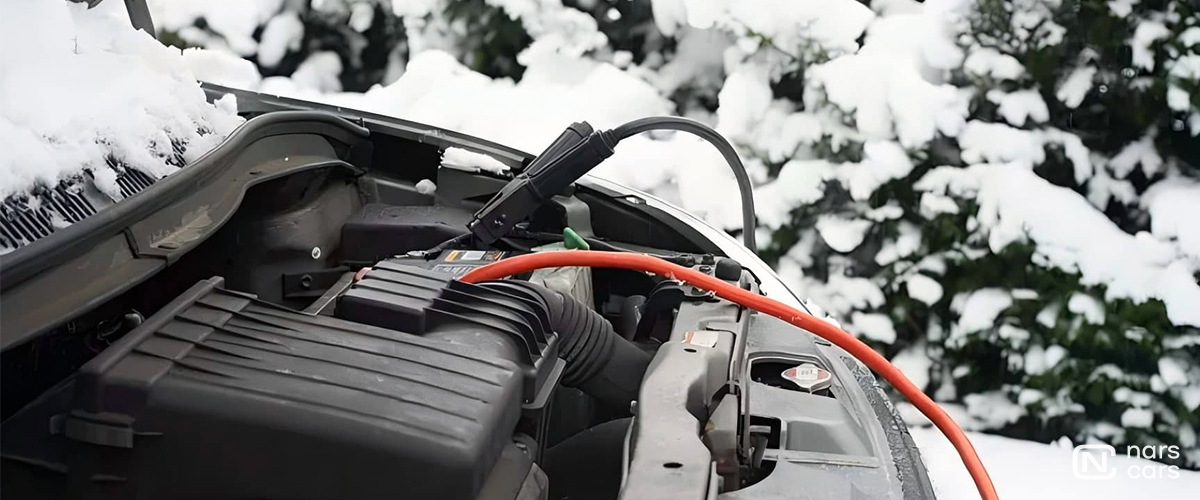
If the engine does not start after three attempts, alternative methods must be used. The first method is to jump-start the car from another vehicle.
The second method is only suitable for cars with manual transmission — starting with a push. How to start a car with a push? To do this, turn on the ignition and second gear, depress the clutch, accelerate the car to a speed of 10–15 km/h by pushing or towing, then smoothly release the clutch pedal. When the engine starts, depress the clutch again and level the revs. This method is strictly contraindicated for cars with automatic transmission and is not recommended for engines with belt-driven timing systems due to the risk of the belt jumping.
Winter trips without surprises: why you should choose to rent from NarsCars
To ensure reliable winter travel and avoid unpleasant situations with starting the engine, there is a proven solution — renting a prepared car. Problems with your own car always happen at the most inopportune moment: before an important business meeting, on the way to the airport, or on the eve of a planned trip.
NarsCars has been operating in the Ukrainian market for over 10 years and has a fleet of over 100 cars of various classes.
- checking and, if necessary, replacing the battery;
- filling with 5W-30 winter motor oil;
- installation of seasonal winter tyres;
- diagnostics of the fuel and ignition systems;
- checking the heater and heaters for proper operation.
The customer receives a car that is fully prepared for cold weather, with a start-up guarantee and round-the-clock technical support. Booking takes a few minutes on the website narscars.com.ua, and managers will help you choose the best option for your specific needs — an executive sedan for a business trip, a spacious crossover for a trip to the Carpathians, or a minivan for family holidays. Special conditions apply for rentals of 7 days or more.