
Winter roads cause stress even for experienced drivers. Driving in icy conditions is radically different from driving in summer: your usual reactions no longer work, and the car behaves unpredictably. According to the Ukrainian Patrol Police, about 30% of all traffic accidents occur in winter. The cause of most accidents is not the weather, but incorrect driving behaviour. Panic and sudden movements can turn a minor skid into a serious accident. Fear of driving in winter is a normal protective reaction of the body, but without control it becomes dangerous. Understanding the physiology of stress and mastering winter driving techniques reduce the risk of accidents several times over. In this article, we will examine the psychological aspects of driving on slippery roads and provide practical recommendations for safe driving.
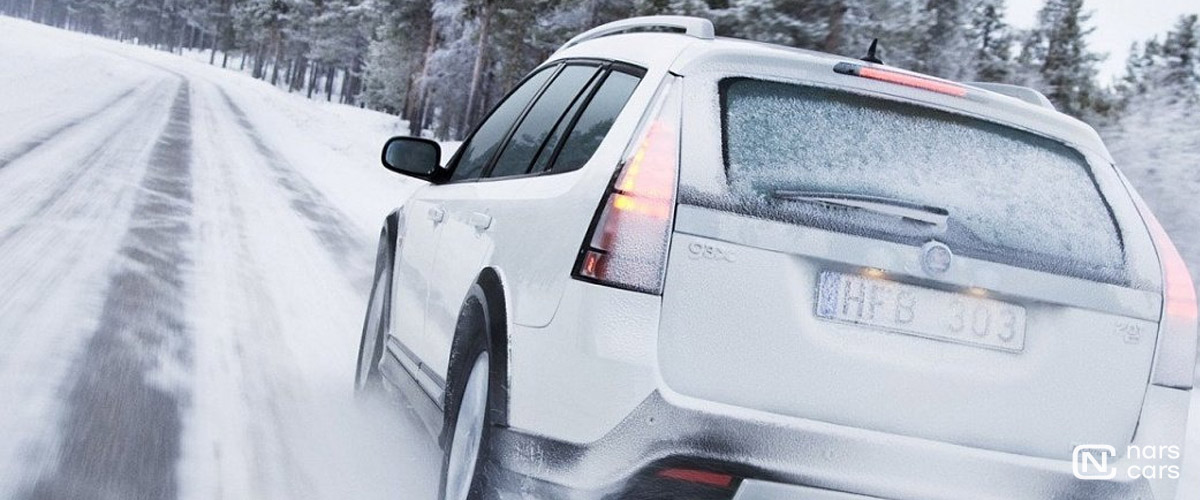
The psychology of winter roads: why panic occurs and how to regain self-control
The fear of slippery roads is instinctive. The brain perceives loss of control over the car as a direct threat to life and instantly activates survival mechanisms. These reactions have been shaped over thousands of years, but on winter roads they often work against the driver.
The physiology of stress: why fear makes us slam on the brakes
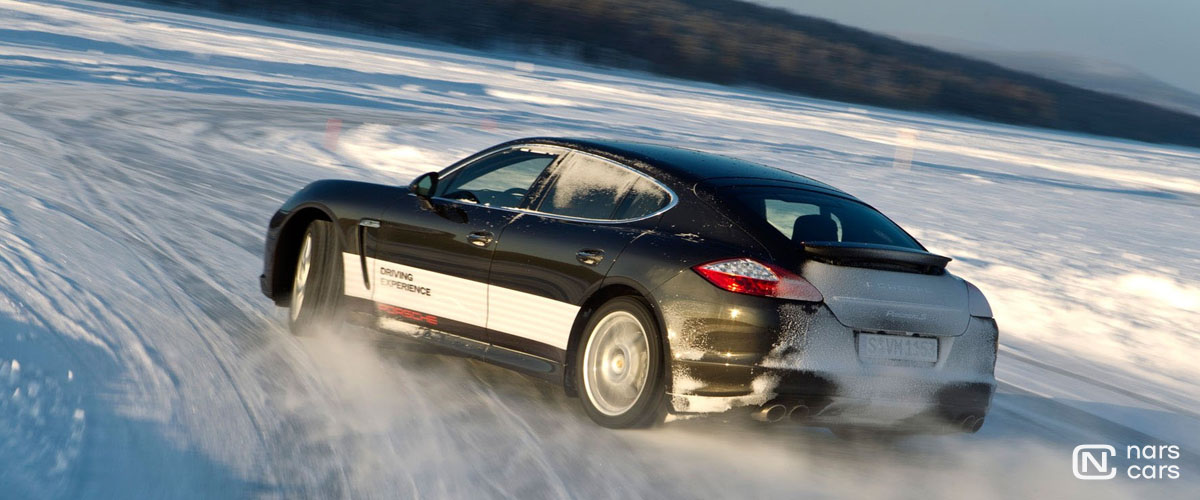
When a dangerous situation arises, the body releases adrenaline and cortisol. These hormones prepare the body for immediate action: muscles tense, the heart rate increases, and reactions become sharp and impulsive. The instinct for self-preservation suggests a simple solution: stop as quickly as possible. On dry asphalt, sudden braking really does help to avoid a collision. However, on ice, this reaction causes the car to skid and lose control completely. As a result, the wheels lock instantly, the car begins to slide by inertia, and the braking distance increases by 2–3 times. Research shows a paradoxical fact: reaction time under stress is reduced to 0.3 seconds, but the quality of decisions made drops by 40%. The brain chooses the simplest action instead of the correct one. That is why smooth braking on a slippery road requires conscious control over your instincts.
Quick calming techniques: proper breathing and focusing your gaze
Stress management begins with breath control. Deep, slow breathing activates the parasympathetic nervous system, which is responsible for relaxation. Your pulse slows down, your muscles relax, and your ability to think rationally returns. An effective breathing technique is "4-7-8":
- slowly inhale through your nose for a count of 4;
- hold your breath for 7 counts;
- smooth exhalation through the mouth for 8 counts;
- repeat the cycle 2–3 times.
The result can be felt within 30–60 seconds. It is best to practise this technique in advance in a calm environment — then it will work automatically at a critical moment. The second tool is proper focus. When you panic, you experience what is known as tunnel vision: your gaze is fixed on the obstacle, and the car moves towards it. The rule is simple: don't look at the danger, look at the way around it. Your hands on the steering wheel will automatically follow the direction of your gaze.
Route planning as a way to reduce anxiety
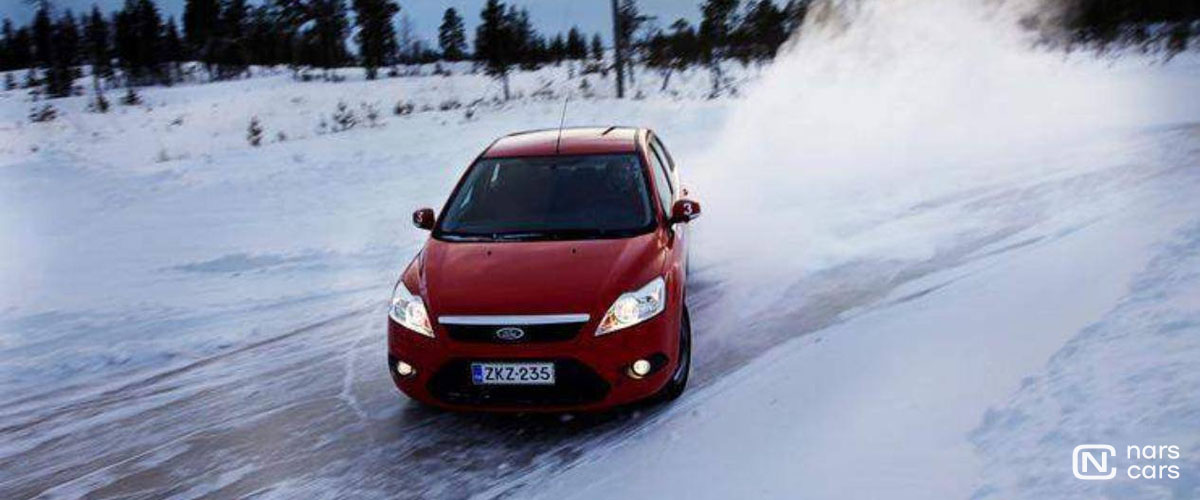
Uncertainty greatly increases fear. An unfamiliar route in difficult weather conditions creates additional psychological stress. Therefore, preparation for the trip begins long before getting into the car. Before departure, it is worth checking:
- the current weather forecast for the duration of the trip;
- information about road conditions;
- the presence of difficult sections on the route (ascents, sharp turns, bridges);
- available alternative routes;
- the location of petrol stations and rest areas.
Modern navigation apps not only show traffic jams, but also warn of accidents ahead. This information helps you avoid problematic sections in advance. It is also important to take travel time into account. In icy conditions, the journey takes 30-50% longer. Allowing extra time reduces pressure and eliminates the need to rush, which in itself reduces the risk of an accident.
Driving in icy conditions: golden rules for safe driving
Theoretical knowledge without practical skills is useless. Understanding how to drive on ice requires conscious practice of each action. The main principle of winter driving is maximum smoothness in all manoeuvres.
Distance and speed: formula for calculating a safe distance on a slippery road
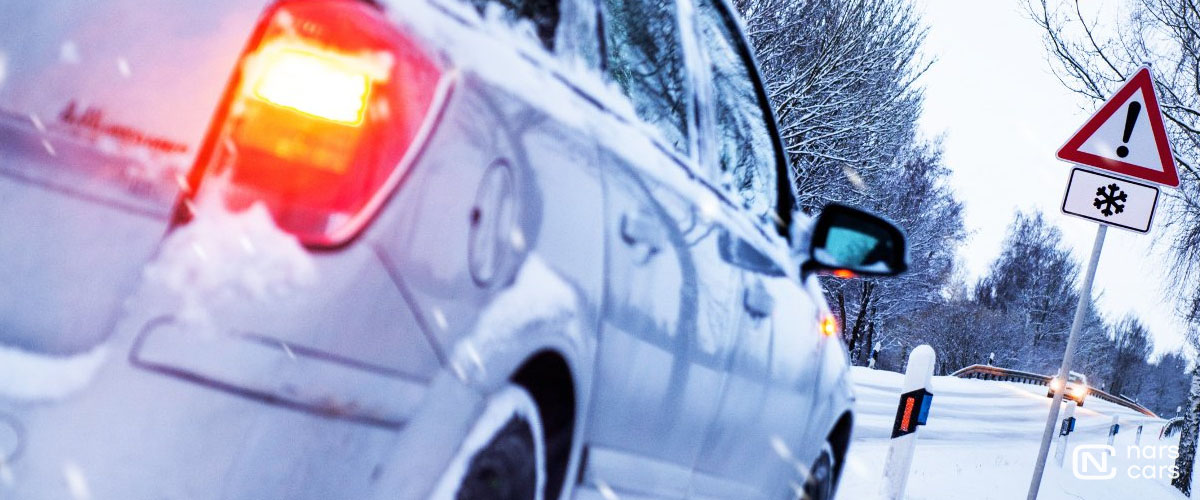
The safe distance in winter is several times greater than the summer norm. The reason for this is the coefficient of friction between the tyres and the road. On dry asphalt, this coefficient is 0.7–0.8, while on ice it is only 0.1–0.2. Accordingly, the braking distance also increases. Formula for calculating distance depending on road surface:
- dry asphalt: speed (km/h) / 2 = distance (m);
- wet surface: speed × 1;
- packed snow: speed × 2;
- ice or black ice: speed × 3–4.
| Type of road surface | At 40 km/h | At 60 km/h |
|---|---|---|
| Dry asphalt | 20 m | 30 m |
| Wet asphalt | 40 m | 60 m |
| Snow | 80 m | 120 m |
| Ice | 120–160 m | 180–240 m |
Practical example: at a speed of 40 km/h on an icy road, you must maintain a distance of at least 120 metres. This is approximately 8–10 car lengths. The optimal speed on ice is no higher than 40 km/h in the city and up to 50–60 km/h on the motorway. Exceeding these values greatly increases the risk of losing control.
Pedal operation: smoothness is the key to road grip
Sudden pressing of the pedals is the main mistake on a slippery road. Any impulsive movement causes the wheels to skid. Accelerate smoothly and brake gently and intermittently. Basic rules for operating the pedals on ice:
- accelerator pedal: press no more than a third of the way down;
- brake pedal: light, short presses instead of one strong press;
- clutch: release as slowly as possible, without jerking.
In cars with automatic transmission, the main thing is to avoid kickdown mode (suddenly pressing the accelerator pedal all the way down). The drive wheels simply spin in place, losing traction with the road. Before turning, reduce speed in advance, while still on a straight section. It is best not to touch the pedals at all while turning. You can only accelerate when exiting the turn, when the steering wheel returns to a straight position.
Engine braking vs. using the brake pedal: when and what to use
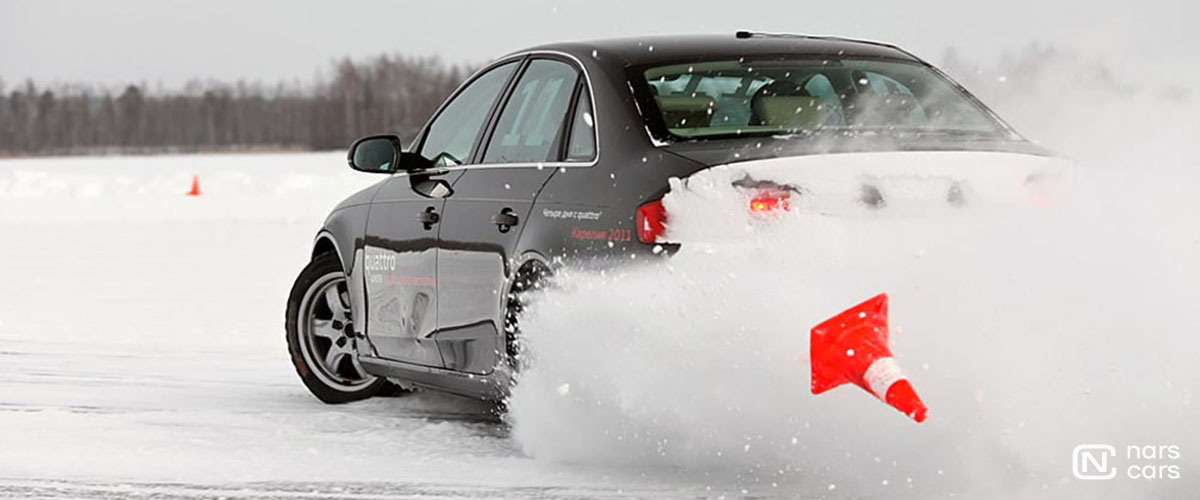
Engine braking is a way to reduce speed by sequentially shifting down gears without using the brake pedal. The main advantage of this method is that the wheels continue to rotate and the car remains controllable. Situations where engine braking is particularly effective:
- long descents with a slope;
- approaching a traffic light or intersection;
- sections with obvious icing;
- heavy traffic ahead.
Technique for manual transmission: Release the accelerator pedal completely. Depress the clutch. Shift down one gear. Slowly release the clutch. Repeat the cycle if necessary. On vehicles with automatic transmission, switch to manual mode or use the lower modes "2" and "L". The brake pedal on a slippery road should be used in emergencies and for final braking. The ABS system on modern cars prevents wheel lock-up, but does not override the laws of physics. The optimal strategy is to combine both methods: first, engine braking for smooth deceleration, then gentle braking with the pedal.
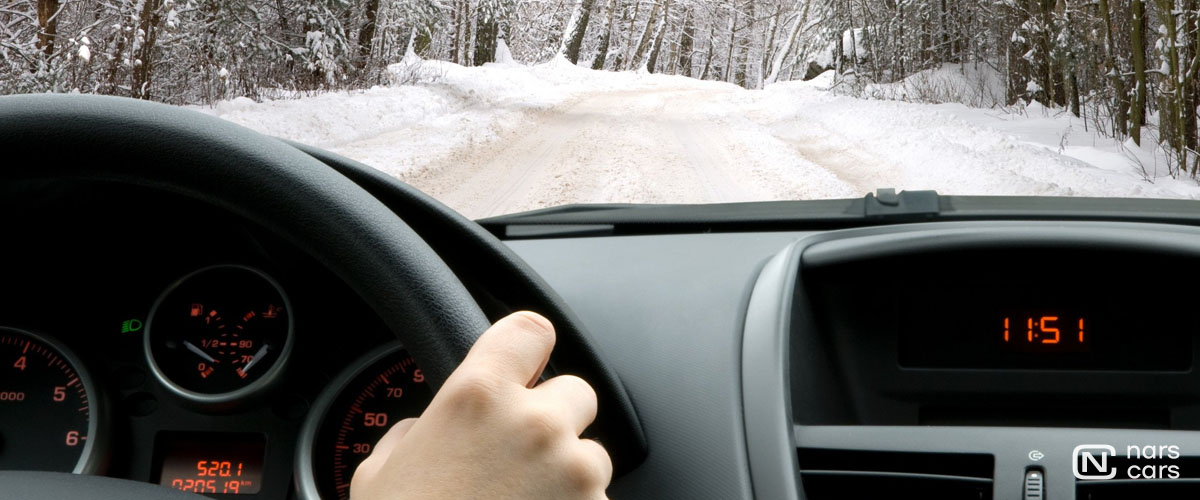
Safety and comfort with NarsCars: forget about stress behind the wheel
Winter travel in your own car requires serious preparation: changing tyres, checking brakes, diagnosing the chassis. An alternative solution is to rent a car from NarsCars. The company takes care of all the technical aspects of the vehicle.
Prepared fleet
More than 100 cars of different classes: from compact city models to all-wheel drive crossovers. Each car undergoes a pre-trip inspection. The braking system, chassis, and fluid levels are all checked before the car is handed over to the customer.
Winter tyres included
From November to March, all cars are equipped with seasonal tyres. Tyres with a tread depth of at least 4 mm are used. This ensures reliable grip on snow and ice.
Safety systems
Most models in the fleet are equipped with electronic assistants:
- ABS — prevents wheel lock during braking;
- ESP — stabilises the car when skidding;
- TCS — prevents wheel spin when starting.
These systems are especially useful on slippery roads. They compensate for driver errors and maintain control in critical situations.
Full Protection
All vehicles are insured under CASCO and OSAGO. The customer is protected from unforeseen expenses in the event of an accident or damage.
Round-the-clock support
Technical assistance is available 24/7. In the event of a breakdown or accident, a tow truck will arrive within an hour. Telephone consultation is available at any time of the day.
Convenient booking
It takes 5 minutes to choose a car on the website. Filters by class, transmission type and all-wheel drive availability simplify the search. Pick-up points are located in major cities of Ukraine. NarsCars has been operating in the market for over 10 years. During this time, more than 15,000 customers have used our services. For details and current rental terms, visit narscars.com.ua.