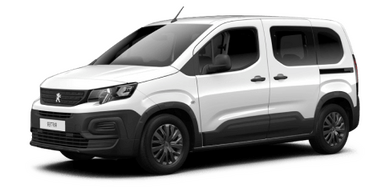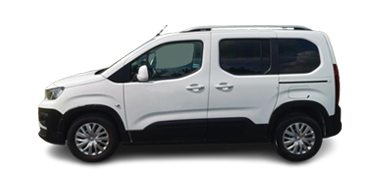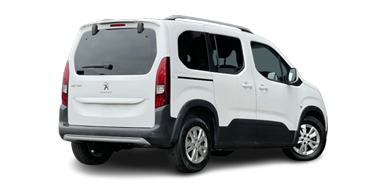

The choice between daily car rental and pay-per-minute car sharing directly affects your travel budget. One mistake in your calculations can turn a "profitable" option into a financial trap, as the difference between the two formats often reaches 40-60% of the total amount. This becomes particularly noticeable for trips lasting more than three hours. In this article, we will analyse the real cost of both options, taking into account hidden fees, and help you determine the best solution for your specific situation.
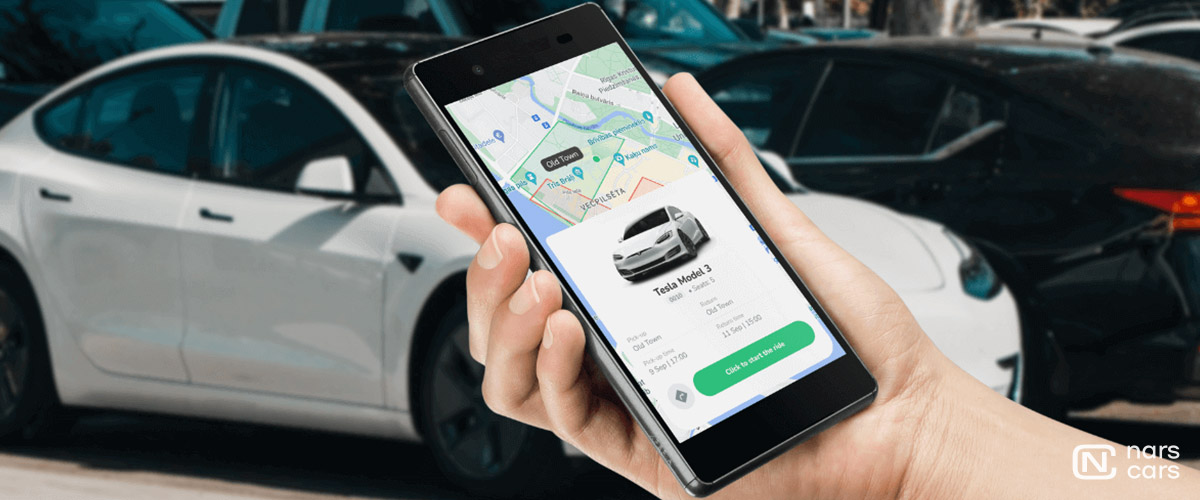
Car sharing or rental: which is better for your needs
The two formats of transport rental solve fundamentally different problems, so the choice between car sharing and rental is a question of practicality rather than prestige. For short city trips lasting 30-60 minutes, per-minute billing is indeed economically justified. However, the situation changes dramatically when the time of use of the car increases.
Car sharing is based on the principle of "take it, drive it, leave it," where payment is charged for each minute of rental at an average rate of 6–9 UAH/min, depending on the class of car. Rental, on the other hand, involves a fixed daily rate: the customer receives the car for a full day at a price known in advance.
When choosing between formats, several criteria should be taken into account: the planned duration of the trip, the type of route (urban or interurban), the need for stops with waiting time, as well as requirements for the class of car. According to statistics, 78% of car sharing users make trips of up to 40 minutes, and it is for this scenario that the format remains profitable. When the time increases to three hours, the financial advantage disappears completely.
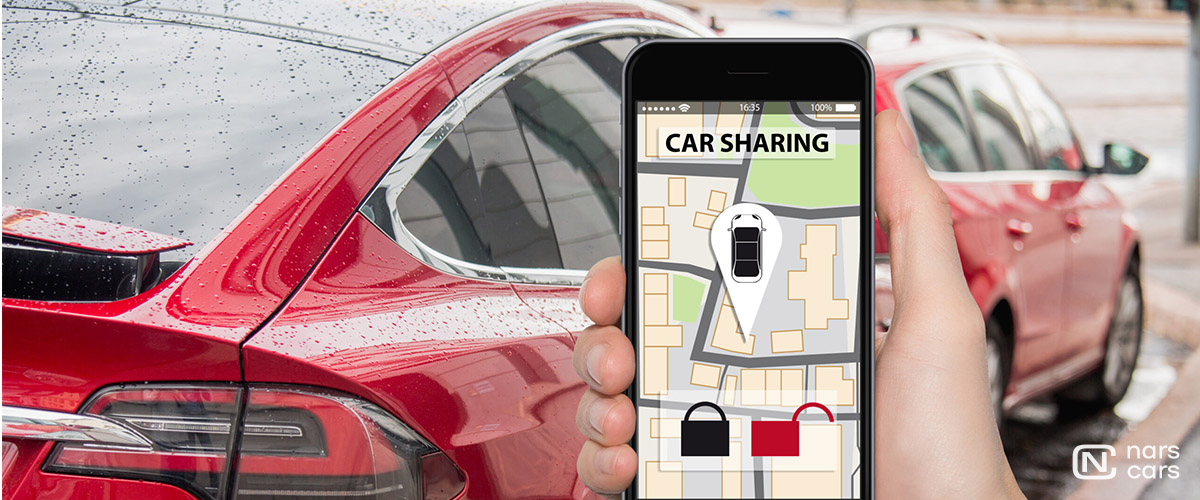
When is traditional rental more profitable for the driver?
When is car sharing profitable, and when is rental profitable? The turning point comes when calculating 3-4 hours of continuous use. Daily rental at NarsCars starts at 1,200 UAH for an economy class car, while three hours of car sharing at a rate of 7 UAH/min costs 1,260 UAH. At first glance, the difference is minimal, but the picture changes for intercity trips.
The 480 km route from Kyiv to Dnipro takes 5-6 hours one way. Car sharing during this time will cost 2,100–2,520 UAH for the trip alone, and the return trip will double the amount to 4,200–5,040 UAH. Daily rental for the same two days will cost only 2,400–2,800 UAH, which is a saving of 45–50% on long distances. In addition to the price, classic rental offers a number of practical advantages: a fixed cost with no surprises, no mileage restrictions, the ability to leave the car overnight at no extra charge, and a full tank of fuel upon receipt.
Which is cheaper: rental or car sharing — comparing costs
For an economy class car, the calculations are as follows: two hours of car sharing will cost 840 UAH, compared to 1,400 UAH for a daily rental. However, after four hours of use, car sharing reaches 1,680 UAH, making rental 280 UAH cheaper. A six-hour trip increases the gap to 1,120 UAH in favour of rental. The break-even point is at 3 hours and 20 minutes — after this threshold, daily rental becomes economically justified.
A tourist planning to visit Lviv's sights over the weekend will spend 3,000–4,000 UAH on car sharing, while a two-day rental will cost 2,800 UAH with the possibility of unlimited trips. For weekly bookings, NarsCars offers a 15–20% discount, which increases the total savings to 5,000–7,000 UAH compared to per-minute payment.

The real price of car sharing: hidden costs
The price of car sharing in advertising materials rarely reflects the real costs, as the base rate is only the tip of the iceberg. Hidden beneath the surface are additional payments that can increase the total amount by 25–40%.
Penalties for parking and ending the rental in the "wrong" zone
Car sharing companies set strict geographical boundaries, and ending a trip outside these boundaries incurs a fine of 300-500 UAH. The map of permitted areas does not cover the entire city: residential areas and suburbs are often excluded from the coverage zone. Parking violations are a separate expense item — the fine for unpaid parking is 510–680 UAH, to which the operator adds an administrative fee of 200–300 UAH for processing the decision.
Waiting costs and night rates
Waiting mode becomes a hidden budget drain: although the rate drops to 3–4 UAH/min, the meter continues to run. An hour's wait at the shopping centre adds 180–240 UAH, and a two-hour business meeting turns an economical trip into an expensive one. Night-time hours from 23:00 to 06:00 increase the base rate by 20–30%.
Condition of the interior and responsibility for the previous driver
Car-sharing vehicles are used by dozens of drivers every day, which affects the condition of the interior. Dirty seats, rubbish in the boot and unpleasant smells are common companions of per-minute rentals. At the same time, responsibility for damage is ambiguous: the previous user may have hidden a scratch, but the next renter will receive the complaint. In the case of daily rentals, the inspection is carried out jointly with the manager, and all defects are recorded in the acceptance and transfer act.

Why you should book a car rental on the NarsCars website
When it comes to car sharing vs car rental, a comparison of the two formats shows that for trips lasting more than three hours, classic rental wins on all counts. NarsCars has been operating in the Ukrainian market for over 10 years and offers a fleet of over 150 cars: from economical sedans to premium crossovers. Transparent pricing eliminates unpleasant surprises — the customer sees the final amount at the booking stage. The price includes comprehensive insurance, technical support and delivery of the car to a convenient location. Each car is serviced every 10,000 km, which guarantees reliability on the road.
Online booking on the website narscars.com.ua takes five minutes. For intercity trips, tourist routes and business trips, daily rental remains the best choice, with savings of 40-60% compared to car sharing.